Zoe Vogel · 7 October 2026
Engineering Challenges in Constructing Isolated Vertical Structures Amid Shifting Desert Dunes
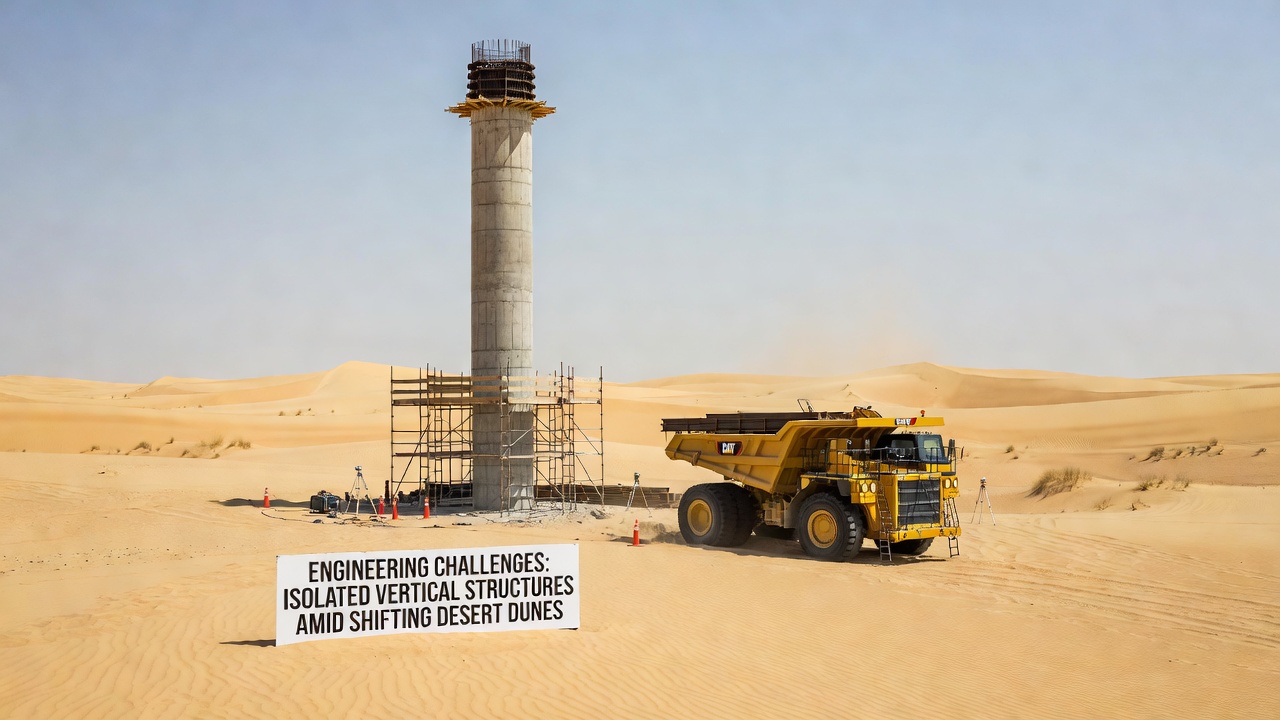
Engineers encounter persistent difficulties when erecting isolated vertical structures in environments dominated by mobile sand dunes, because wind-driven sediment transport continually alters the ground surface and subsurface conditions around any fixed installation. These projects require specialized approaches to site assessment and structural anchoring that differ markedly from standard construction practices in stable terrains, and data from monitoring programs indicate that dune migration rates can reach several meters per year in active fields across arid regions.
Understanding Dune Dynamics and Their Impact on Site Stability
Desert dunes respond to prevailing wind patterns, seasonal variations, and occasional extreme weather events, which means that a location suitable for construction today may experience significant burial or exposure within months. Researchers at institutions focused on arid land studies have documented how barchan and transverse dune types migrate at different speeds depending on sand supply and wind velocity, and this movement exerts lateral pressures on foundations while also changing load distributions over time. Projects initiated before October 2026 incorporated real-time satellite imagery to track these shifts, allowing teams to adjust pile depths and anchor configurations based on predicted sand displacement patterns observed in the preceding decade.
Soil investigations must account for loose, non-cohesive sands that offer minimal shear strength, and boreholes often reveal layered deposits with varying grain sizes that affect compaction efforts. Engineers therefore combine geophysical surveys with periodic resampling to build models that forecast how a structure will interact with ongoing dune advancement, rather than relying on static geotechnical reports alone.
Foundation Design Solutions for Mobile Substrates
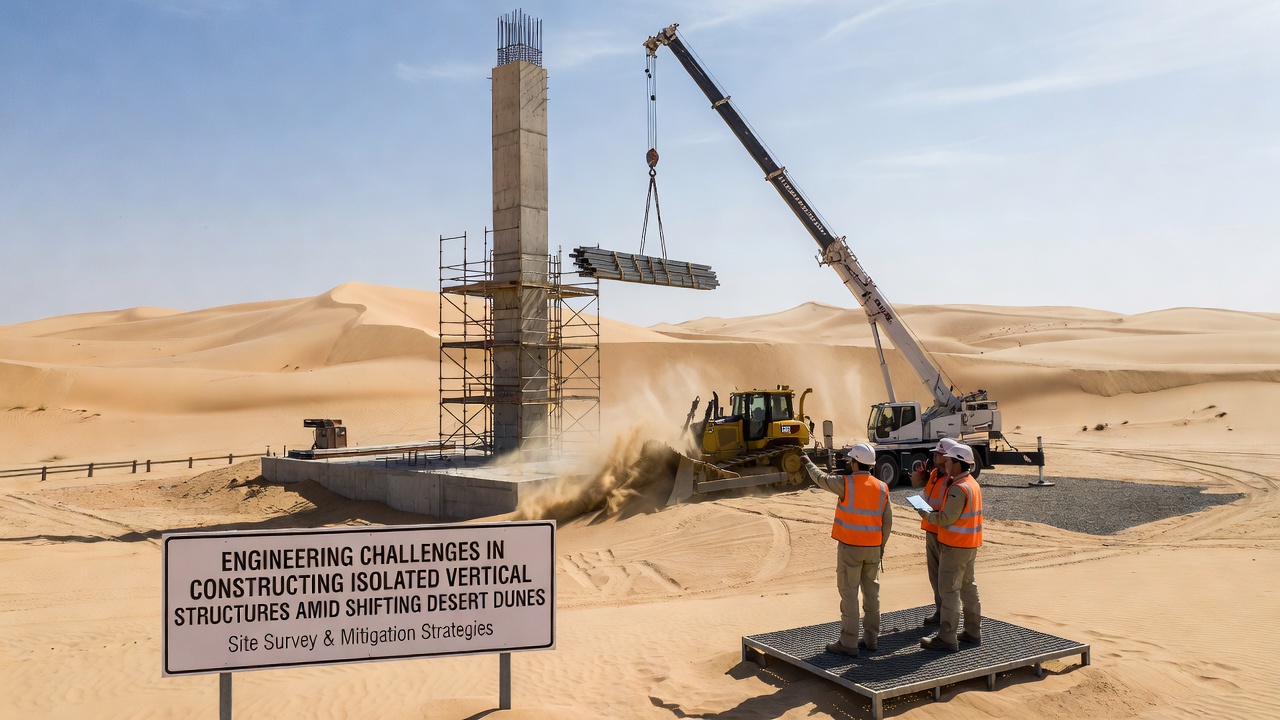
Deep foundation systems such as drilled piers or helical piles extend below the zone of active sand movement, yet even these elements require additional stabilization measures because migrating dunes can create voids or uneven loading around shafts. One documented approach involves installing tension anchors that connect the superstructure directly to bedrock when available, while another uses widened footings combined with geogrid reinforcement to distribute forces across larger areas of shifting material. Case examples from major desert infrastructure initiatives show that hybrid systems combining both methods have maintained alignment tolerances within specified limits despite annual sand accretion exceeding two meters in height.
Drainage provisions also play a critical role, since occasional rainfall can trigger localized liquefaction in dune sands, and designs incorporate perforated pipes and graded filters to prevent water accumulation near critical load-bearing elements. These features integrate with overall site grading plans that seek to minimize disruption to natural wind flow patterns around the completed structure.
Wind Loading, Material Durability, and Environmental Factors
Isolated vertical structures experience amplified wind forces because surrounding dunes provide inconsistent shelter, and gusts can carry abrasive particles that accelerate surface wear on exposed components. Material specifications therefore emphasize coatings resistant to sandblasting and ultraviolet degradation, while structural frames incorporate redundancy to handle fluctuating aerodynamic pressures measured during seasonal wind events. NASA Earth Observatory reports have supplied long-term datasets on regional wind regimes that inform these calculations for projects in multiple desert basins.
Corrosion risks rise sharply in environments with high salinity and temperature swings, prompting the use of specialized alloys and cathodic protection systems on buried steel elements. Observers note that maintenance schedules for such installations must adapt to access limitations created by dune reconfiguration, and remote monitoring sensors now provide early alerts when sand accumulation threatens ventilation or drainage openings.
Logistical and Construction Sequence Adaptations
Transporting heavy equipment and prefabricated sections across unstable dune surfaces demands temporary roadways or elevated causeways that themselves require frequent repositioning. Construction sequences often proceed in stages timed to periods of lower wind activity, and crews employ modular assembly techniques that reduce on-site duration in harsh conditions. Supply chain planning accounts for delays caused by sandstorms, which can halt operations for days while also necessitating protective enclosures for sensitive components during storage.
Coordination with environmental monitoring teams ensures that construction activities do not inadvertently accelerate dune destabilization in adjacent areas, and some projects have incorporated artificial windbreaks or vegetation trials to manage sediment movement around the primary structure footprint.
Conclusion
Engineering responses to dune mobility continue to evolve through integration of remote sensing, advanced geotechnical modeling, and adaptive construction methods, and evidence from ongoing installations demonstrates measurable improvements in long-term structural performance. Continued collection of field data through October 2026 and beyond supports refinement of design standards that address the unique combination of wind, sand, and thermal stresses present in these environments. CSIRO arid zone research contributes additional insights from comparable Australian field sites that help validate modeling approaches used elsewhere.